
conservation
Maurice Braillard
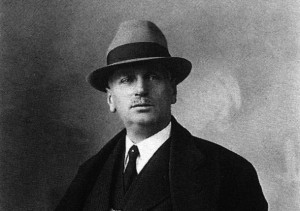
An architect, planner and politician who made his life in Geneva, Maurice Braillard was professionally active in Switzerland and France between 1904 and 1957, leaving behind him a substantial and diverse body of work.
Braillard was a visual thinker who was animated by a social vision. He developed his projects through drawing; his boldest work is from the Twenties and the Thirties. The architectural integration of art and craftsmanship is an overriding concern of the first period of his career, as exemplified by the Mairie d’Onex and by the Cité d’Ugine (Savoie). Gradually, however, Braillard widened his investigations. In more recent programmes such as that of the Salève Aerial Cable-Car, he developed a greatly evocative Modernist plastic grammar. In housing projects in Geneva – the Maison Ronde, the Cité Vieusseux and the Squares de Montchoisy – he focussed on the functional aspects and on promoting a sense of a shared neighbourhood life through a valorisation of intermediate spaces where private and public spheres intersected.
Maurice Braillard introduced a new sensitivity to modern urban planning in adapting morphology to topography and in attending to the differentiation of public space.
Finally, even before his appointment as head of the Geneva Department of Public Works (1933–1936), he turned his attention to questions of planning and urbanism. In unrealised projects for the Rive Droite and in his overall development plan for Geneva (Plan Directeur, 1935) he introduced a new sensitivity to modern urban planning in adapting morphology to topography and attending to the differentiation of public space.
His work was honoured by the City of Geneva, which named a street after him in Moillebeau. The Canton of Geneva also expressed its recognition of his work in listing an ensemble from the Thirties as a historic monument: the Maison Ronde.
The Maurice Braillard Sketchbook contains many of his preparatory sketches.
Fondation Braillard Architectes
16, rue Saint-Léger
CH — 1205 Genève
Tel: +41 22 311 17 17
info@braillard.ch


