foundation
Biography
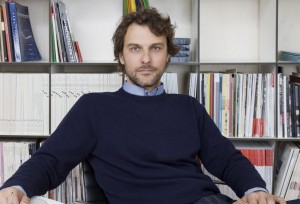
Following a diploma in cabinetmaking, Christian Dupraz (Geneva / Switzerland) further developed his studies at the Engineering School of Geneva [EIG] and the School of Architecture at the University of Geneva [EAUG], under the direction of Professor Bruno Reichlin. Winner of the Arditi Prize in Architecture and Urbanism for his dissertation work (1996), he consequently obtained a grant (1999) from the National Fund for Swiss Scientific Research [FNRS] for his research on the specific use of reinforced concrete in 1950’s architecture, which he completed under the supervision of Professor Martin Steinmann [EPFL]. He co-directed the practice Christian Dupraz & Pierre-Alain Dupraz architects (1996-2001) and founded in 2002, the autonomous Christian Dupraz Architects office in Geneva [www.christiandupraz.ch]. In parallel to his work as an architect, he continues to pursue his academic and cultural engagement, writing in journals, as well as designing and editing furniture [www.36furnituresystem.ch]. Professor at the Geneva University of Art and Design [HEAD] since 2001, he has also been invited as a guest professor at both the School of Architecture of Nancy (2001) and the School of Architecture of Lyon (2004). Moreover, Christian Dupraz is also an accredited member of the Federation of Swiss Architects – within the Geneva section [FAS-BAS], as well as an active committee member (2003-2008), of the Society of Swiss Engineers and Architects [SIA] and the Geneva Association of Architects [AGA]. He co-founded the House of Architecture in Geneva [ma-ge], is a board member of the Braillard Foundation in Geneva [FBA], as well as being a member of the Cantonal Fund for Contemporary Art of the State of Geneva [FCAC] (2002-2010). His practice draws its inspiration from all fields of human experience. Promoting a dialogue with the various users, whilst undertaking investigations on various themes such as memory, form and distance. He explores through each project and its sometimes-constraining contexts, an architecture of experience, of simplicity, that draws its value from the economy of the resources employed. The consistency of his theoretical and constructive concerns leads this architect to emphasize the common nature of each realization.
Fondation Braillard Architectes
16, rue Saint-Léger
CH — 1205 Genève
Tel: +41 22 311 17 17
info@braillard.ch


