
Rôle Public
Colloquium
April 8, 2011
Gated communities between innovation and urban fortifications
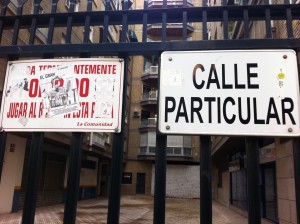
From the pursuit of a secure environment reserved to exclusive members to the tendency of the most privileged to secede (Le Goix, 2001, 2006), from the desire of having one’s own space to the will of privatising privileged sites (Smithsimon, 2010), from the specter of a fragmented town to the world’s worst possible nightmare (Fullilove, 2005), the diffusion of private and closed residential enclaves often appear as a grim presence lurking over the future of cities and their capacity to constitute society (Low, 2003; Charmes, 2005). Gated communities define, in terms of territory, the outlines of a post-modern sociality blending individualism and the wish for a secluded environment.
Despite these criticisms, this “generic real estate product” (Bagaeen, Uduku, 2010) does not cease to attract clients who, as well as securing their living environment, seek to find within this product an idealised and contractualised incarnation of the communal way of life. And whilst they appeared some 15 years ago as a strictly American peculiarity, the closed architectural and town-planning models have appeared in Europe with their own local characteristics since (Paquot, 2009).
This conference seeks to deepen the understanding of these private and closed residential spaces by following three main themes:
Logics of action and systems of actors. The first theme seeks to document the contexts in which the strategies at the origin of these spatial forms are deployed. Through case studies, we will seek further understanding of the beginnings of private and closed residential spaces by focussing on the different arbitrations made by both private and public figures who allowed their implantation. We will also attempt to identify the tools the producers of the city have at their disposal in order to structure these spaces. We will try to explain the ways in which the territory operators integrate both the aspirations of a population wishing to move into this type of neighbourhood and the need to constitute a society.
Diffusion of an architectural and town-planning model: the object of the second theme brings together contributions with the intention of discussing not only the circulation of a generic architectural model, but also its hybridisation in particular contexts. We will pay particular attention here to local forms based on this generic model, while trying to clarify processes that led to these hybrid forms. The approaches could be morphological, but also semeiological or even comprehensive. Communications clarifying the economic origins of such hybridisations are also expected. Contributions could also contain a historical dimension to show how this “spatiotype” implants itself in a certain way with nature, or with low density etc.
Being amongst themselves: the last theme seeks to thematise these spaces in their everyday nature. The contributions related to this theme should seek to debate the questions of how these spaces constitute the repository of specific forms of sociability, ways of living that occur in these spaces, collective projects that develop there or ways of creating society in these locations. We will show how these places are (or are not) strictly exclusive spaces, what their communal aspect consists of; in what sense they are (or are not) places where a paradoxical collectivism occurs. The residential projects and aspirations of the inhabitants of these areas could also be a basis for future possible investigation.
Submitting a proposal
Written proposals in English or French should be submitted by e-mail (colloque (at) braillard [dot] ch) by the 18th of October 2010. The document should contain a title, a summary of 600 to 800 words (maximum), 5 keywords as well as the name, the institution, the postal and electronic address of the author(s). The summary should include a theoretical framework and an outline of problems. Mention of a methodological framework, of a work area and of expected results is recommended.
After an evaluation has been carried out by the Scientific Committee, the authors will be informed of the acceptance or the refusal of their proposal from the 15th of November 2010. The researchers retained will have to deliver – by 28th February 2011 –, an article of approximately 3’500 words (summary and bibliography included). After evaluation by the Scientific Committee, some authors will have the possibility to publish an extended version of their contribution in a peer reviewed scientific journal.
Scientific organisation
Fondation Braillard Architectes, Geneva. Founded in 1987, Fondation Braillard Architectes (FBA) is active in the fields of research in urban studies and city sciences, valorisation and conservation of the architectural heritage of the 20th century and aid towards innovative achievements in terms of architecture and urbanism.
Institute of Geography at the University of Lausanne (Observatoire de la ville et du développement durable). The university observatory of the city and of sustainable development conducts research in urban theory, analysis of urban regimes and their social, spatial and environmental incidences, urban production and project urbanism.
Institute of Environmental Sciences at the University of Geneva (Globalisation, Urbanism and Governance Group). The Institute of Environmental Sciences (ISE) in an inter-faculty entity of the University of Geneva created in March 2009. The ISE’s purpose is for the teaching and interdisciplinary research in various fields of the environment, in particular urbanism and governance.
Organisation committee
Rémi Baudoui, Urbanism and Governance, Institute of Environmental Sciences, University of Geneva.
Christophe Mager, Institute of Geography, University of Lausanne.
Laurent Matthey, Fondation Braillard Architectes, Geneva.
Fees
The registration fee of 80 Swiss francs covers meal costs and documentation for the conference.
Schedule
9 h 00 – 9 h 30 : Opening of the colloquium – Institut national genevois (promenade du Pin 1), salle A
9 h 30 – 11 h 00 : Session 1.A (salle A) : acteurs et production
Elisabeth Dorier – Université de Provence, Isabelle Berry-Chikahoui, Université de Montpellier 3 et Sébastien Bridier – Université de Provence
Les territoires de la fermeture résidentielle : diffusion et complexité. Exemple ou laboratoire marseillais ?
Gérald Billard – Université du Maine
La perméabilité des résidences fermées en France : la fermeture résidentielle au défi des pratiques quotidiennes habitantes.
François Madoré – Université de Nantes
Pratiques et discours de la promotion immobilière en France : comment et pourquoi construire des ensembles résidentiels fermés ?
9 h 30 – 11 h 00 : Session 1. B (salle B) : rapport au politique
Maria Zotova – Académie des sciences de Russie
Urban residential segregations: approach of the social, and economic causes and consequences of the gated communities in Russia.
Mathieu Perrin – Institut d’urbanisme de Grenoble
Démocratisation & fragmentation : la Cité et l’habiter
David Gaillard – Fondation Braillard Architectes
Vauban, écoquartier ou communauté fermée ? Entre contrôle morale et hybridation de la norme écologique.
11 h 00 – 11 h 20 : PAUSE
11 h 20 – 13 h 00 : Session 2.A (salle A) : aspirations résidentielles et entre-soi
Christian Dessouroux – Université libre de Bruxelles
Logiques géographiques de l’implantation d’ensembles résidentiels fermés à Bruxelles depuis 1990.
Guy Tapie & Caroline Mazel – École nationale supérieure d’architecture et de paysage de Bordeaux
La résidence sécurisée, l’expansion des accédants à la sécurité.
Evelyne André – Université Paris 1 Panthéon-Sorbonne
Le modèle Sun City à la française fait-il recette ?
11 h 20 – 13 h 00 : Session 2.B (salle B) : morphologies
Céline Loudier-Malgouyres – Institut d’aménagement et d’urbanisme d’Île-de-France
Les ensembles d’habitat individuel fermés en Ile-de-France. Des morphologies surprenantes, à l’encontre des images suppossées.
Patrice Ballester – Université de Toulouse
Le complexe immobilier Diagonal Mar à Barcelone (1994-2010) : the eyes wide shut ? Ou comment cacher par des artifices paysagers l’implantation d’une communauté fermée.
Fanny Vuaillat – Université de Nantes
Les processus de fermeture des rues publiques ou privées : entre communautés d’intérêts et conflits. Regards croisés Nantes (France) / Recife (Brésil).
13 h 00 – 14 h 20 : PAUSE
14 h 30 – 16 h 40 : Session 3.A (salle A) : vu d’ailleurs : sécurisation et fragmentation
Viviana Riwilis – Université de Montréal
La quintessence d’une ville privée. Le cas de Nordelta dans l’agglomération de Buenos Aires.
Cecilia de la Mora – Université du Québec à Montréal et Viviana Riwilis – Université de Montréal
Figures de la ville mosaïque. Une approche comparative de quatre pays : Argentine, Brésil, Afrique du sud et Inde.
Magdalena Górczynska – Académie polonaise des sciences
Gated communities: sense of security versus spatial order.
Patrick Le Guirriec – Université de Tours
Les condominios brésiliens: des territoires sans peuple ?
Guénola Capron – Universidad Autónoma Metropolitana, Azcapotzalco Enfermement résidentiel, peurs et sentiment d’insécurité urbaine des habitants dans les grandes métropoles latino-américaines.
14 h 30 – 16 h 40 : Session 3.B (salle B) : hybridation
Bénédicte Auvray – Université du Havre
Hybridation touristique des structures résidentielles fermées : du resort à l’île privée.
Maira Machado-Martins – Institut français d’urbanisme de l’Université de Paris-Est
Les copropriétés populaires à Rio de Janeiro (Brésil) : un nouveau modèle d’habitat spontané ?
Bénédicte Florin – Université de Tours
Les compounds du Caire, des espaces extra-territoriaux ? Dimensions urbanistiques et idéologiques d’une nouvelle forme urbaine.
Mathieu Alaime – Université de Tours
La région d’Aqaba en Jordanie : de la gouvernance extraterritoriale au processus d’ex-territorialisation communautaire.
16 h 40 – 17 h 00 : Wrap-up of the colloquium (salle A)
Fondation Braillard Architectes
16, rue Saint-Léger
CH — 1205 Genève
Tel: +41 22 311 17 17
info@braillard.ch


